Epiphysics
Epiphysics
TheoryResearchExperimentsApplications
Epimechanics — Part 1.5: Causors

Epimechanics — Part 1.5: Causors

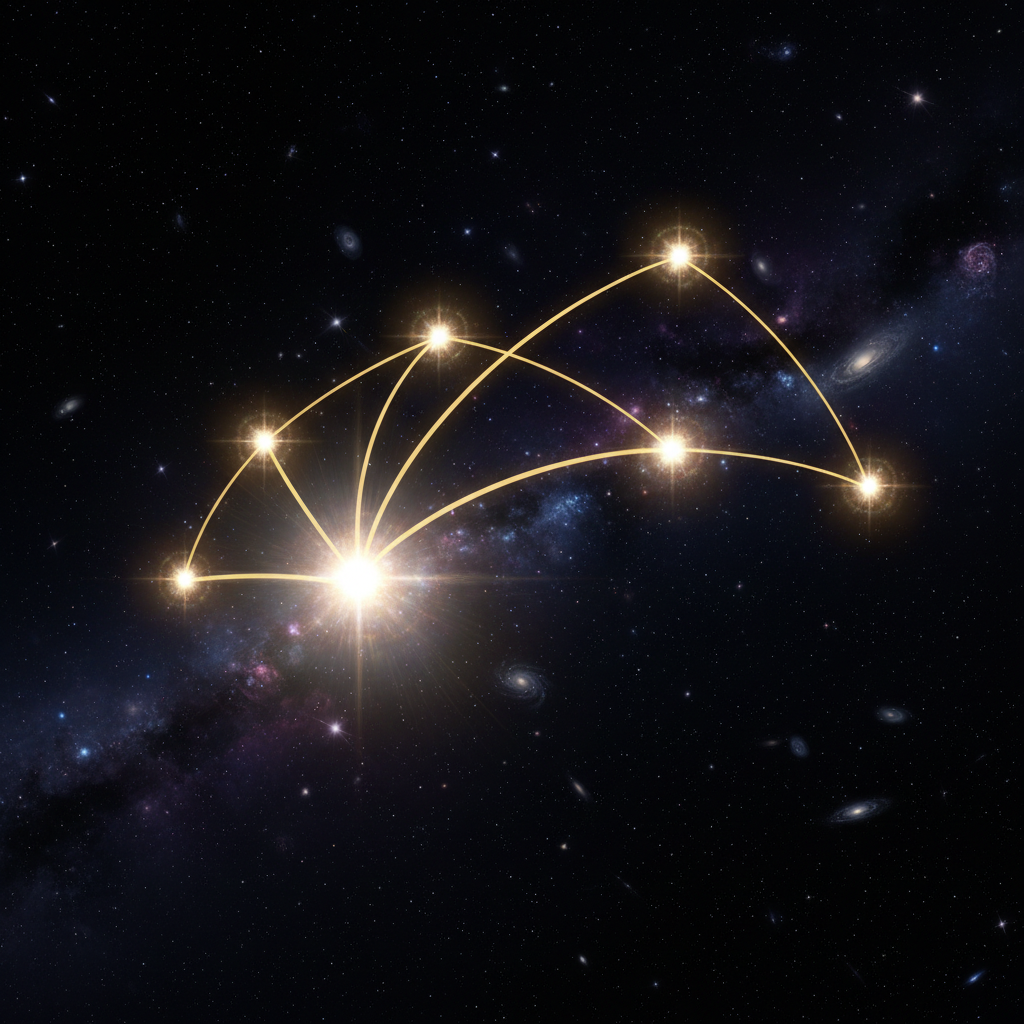
The periodic table problem for general mechanics. What are entities made of? Starting from bare causal events — state transitions with no assumed physics — and building upward through symmetry to energy, entities, and the composition hierarchy of the cause-plex.

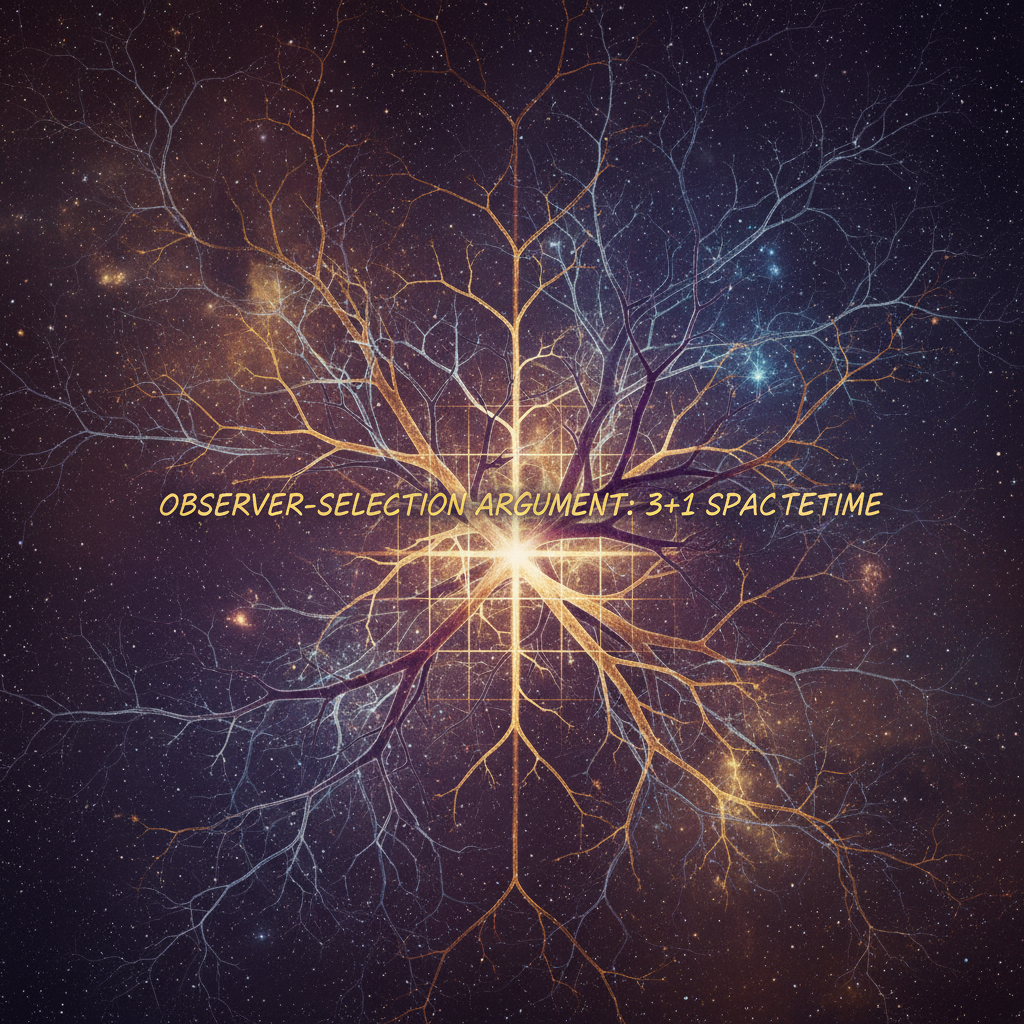
Why 3+1: Observer-Selection Constraints on Spacetime Dimensionality in the Cause-Plex Framework

Why 3+1: Observer-Selection Constraints on Spacetime Dimensionality in the Cause-Plex Framework

The cause-plex framework does not derive 3+1 dimensional spacetime from first principles. Instead, it explains why observers necessarily find themselves in 3+1 by showing that other dimensionalities fail to support the structural requirements for observer-class entities. This paper develops the selective convergence argument: n_t = 1 follows from the causal partial order; n_s = 3 follows from Tangherlini's orbital stability result and the knot-topology requirement for topologically non-trivial loop structures. The argument is honestly labeled as an observer-selection conjecture, not a derivation, and is shown to be strictly more defensible than Wolfram's singular convergence claim.

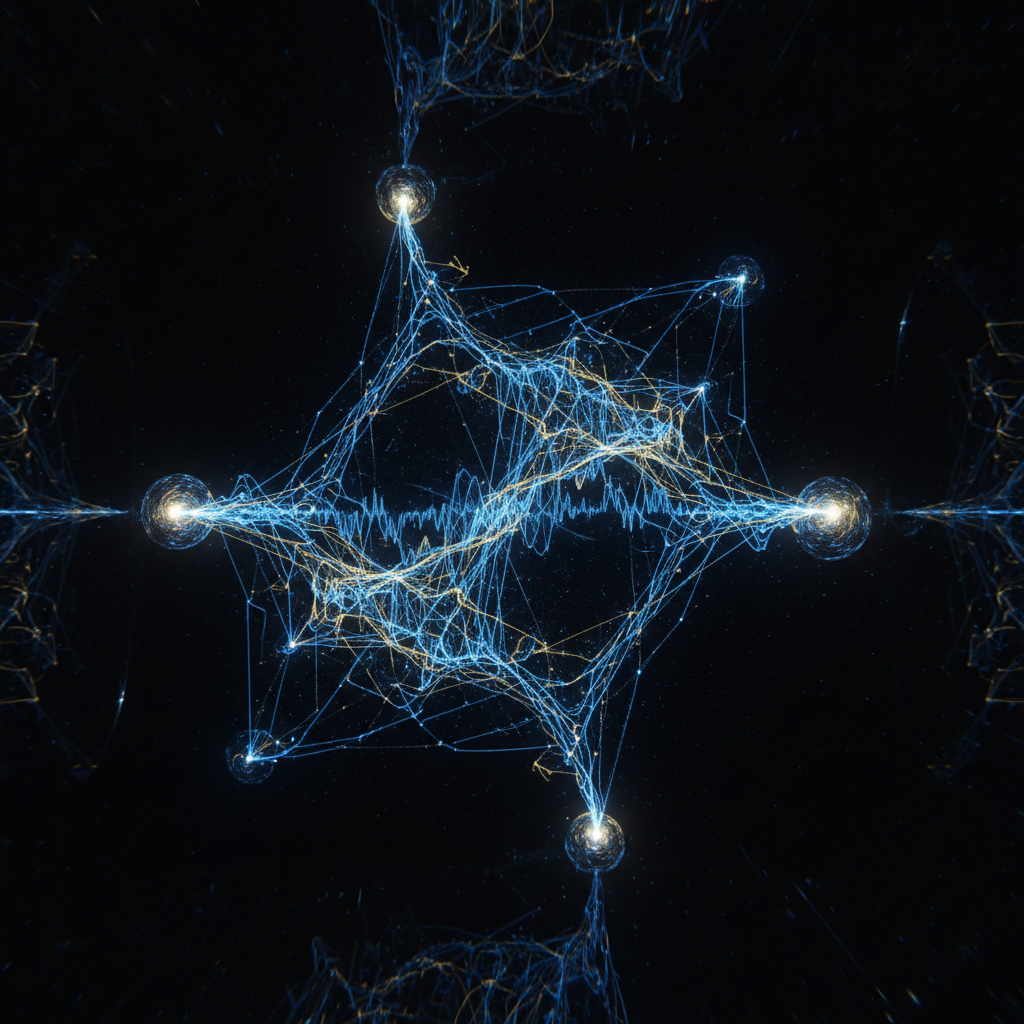
Cause-Plex and Quantum Mechanics: Deriving Quantum Structure from Multiway Causal Order

Cause-Plex and Quantum Mechanics: Deriving Quantum Structure from Multiway Causal Order

We derive quantum mechanical structure from the multiway cause-plex — the collection of all causally consistent histories consistent with a given initial state. Given Postulate Q' (the cause-plex is multiway), quantum mechanics follows via two convergent arguments: (1) Sorkin's grade-2 quantum measure — the minimal consistent probability theory on a multiway structure forces complex amplitudes; (2) a loop-phase argument native to the cause-plex — closed loop amplitude weights must form a minimal continuous group, which is uniquely U(1). The Wick rotation analogy provides corroborating structural motivation. Together these arguments, plus Gorard's continuum limit result, recover the full quantum formalism.

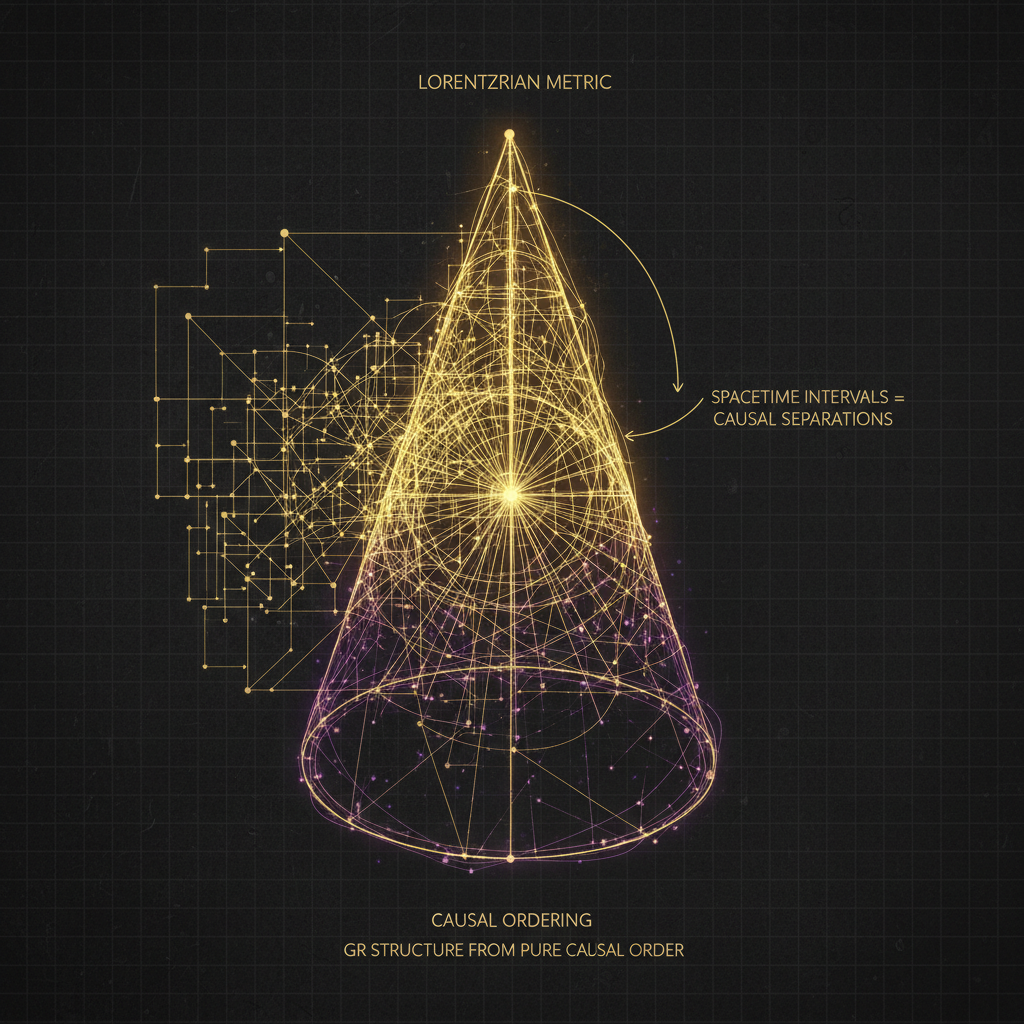
Cause-Plex and Spacetime: Deriving the Lorentzian Metric from Causal Structure

Cause-Plex and Spacetime: Deriving the Lorentzian Metric from Causal Structure

Formal derivation of the Lorentzian metric, Lorentz invariance, and energy conservation from cause-plex structure alone. The primitive is the causal event — a state transition with no assumed physics. Spacetime and energy emerge from structural properties of the cause-plex hypergraph.

Epimechanics — Series Map

Epimechanics — Series Map

Complete map of the epimechanics theory series: reading order, document relationships, proof status, and open questions. Start here to navigate the full framework.

Epimechanics — Part 2.5: Entity Interaction

Epimechanics — Part 2.5: Entity Interaction

How entities sustain, strengthen, weaken, or dissolve each other through external coupling. Trade, dependency, parasitism, and predation analyzed as coupling chain relationships between auto-causal loops. The foundation for understanding complex multi-entity systems.

Epimechanics — Coupling Chain Examples

Epimechanics — Coupling Chain Examples

Worked examples of entity-coupling chains across biology, economics, and society. Dimensional analysis applied to real processes: each chain shows entities as typed unit-carriers and coupling tensors as transducer-dependent conversion factors.

Epimechanics Glossary

Epimechanics Glossary

Canonical definitions for core Epimechanics terms. Hover-enabled abbreviations in theory pages should match these definitions.

Belief Fields and Potential Fields — What Entities Think Will Happen vs What Could

Belief Fields and Potential Fields — What Entities Think Will Happen vs What Could

Every computational entity carries a probabilistic model of future states — a belief field. Reality has its own potential field. The gap between them is where learning, delusion, preparation, and surprise live.

Epimechanics — Part 0: Foundations

Epimechanics — Part 0: Foundations

What Epimechanics is, what it claims, what it doesn't claim, and the conceptual foundations everything else rests on. Representations, entities, the grammar/vocabulary distinction, and the relationship between Epimechanics (the theory) and Epiphysics (the empirical program).

Cross-Level Tracing: From Fundamental Physics to Emergent Entities

Cross-Level Tracing: From Fundamental Physics to Emergent Entities

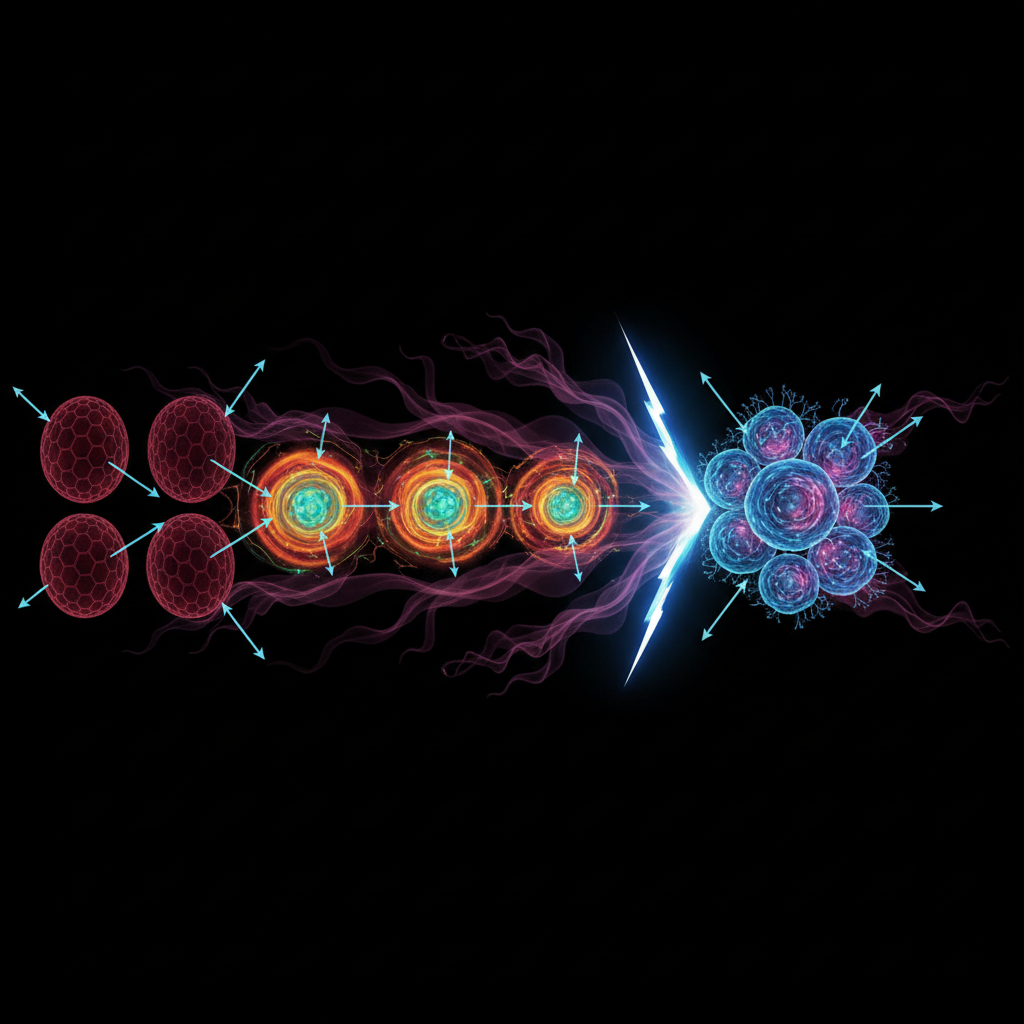
How does Epimechanics' atomic decomposition (bonds, loops, basins) connect across scales? What survives coarse-graining, what doesn't, and where the framework stands against existing multi-scale approaches.

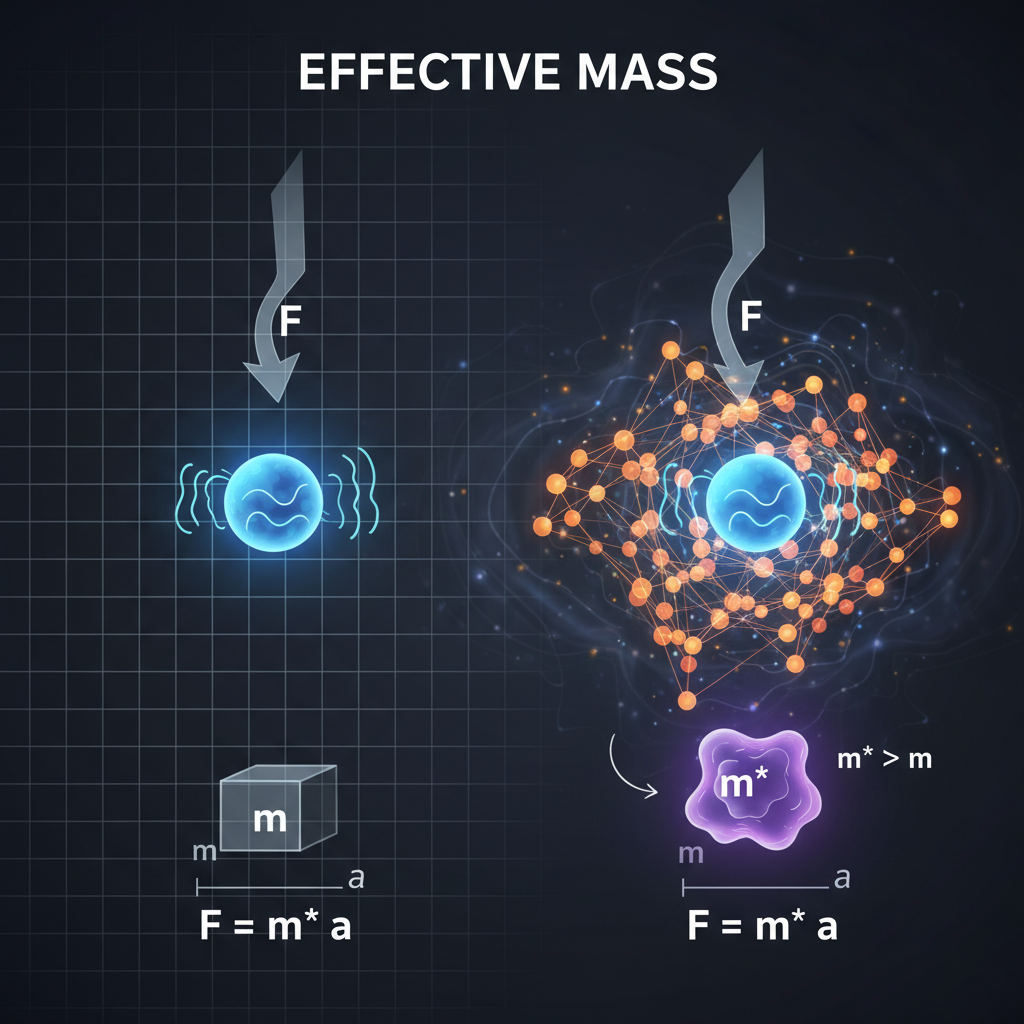
Effective Mass: How the Medium Shapes Resistance

Effective Mass: How the Medium Shapes Resistance

An entity's resistance to state change depends not just on its internal structure but on the medium it moves through. Bare mass vs. effective mass, and why the same entity has different inertia in different contexts.

The Persistence Reversal: When Composites Outlive Their Parts

The Persistence Reversal: When Composites Outlive Their Parts

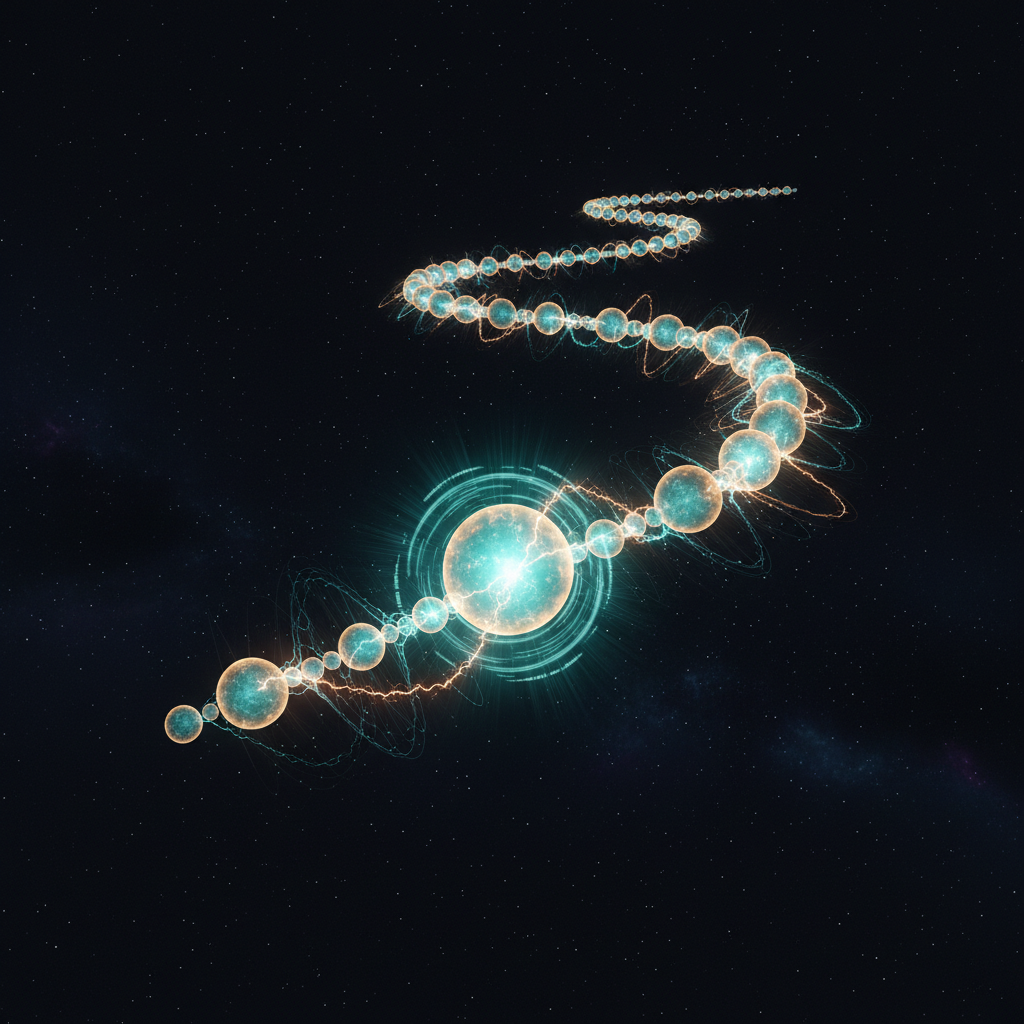
At the bottom of the entity hierarchy, constituents outlive composites. At the top, composites outlive constituents. This reversal marks the boundary between passive and active stability — the structural signature of the life transition.

Epimechanics - Part 1c: The Thermodynamic Emergence of Life

Epimechanics - Part 1c: The Thermodynamic Emergence of Life

Life is a thermodynamic phase transition - expected above a critical threshold of energy gradient and molecular diversity, derivable from Epimechanics, and distinguishable from non-living dissipative structures by informational coupling. Five falsifiable predictions.

Epimechanics - Part 1: The Generalized Mechanics

Epimechanics - Part 1: The Generalized Mechanics

Physics, understood abstractly, is the skeleton of metaphysics. A complete framework deriving state, velocity, mass, momentum, force, energy, coupling constants, and fields in terms of a single abstract state variable X.

Epimechanics - Part 1b: Uncertainty, Coordinates, and Relativity

Epimechanics - Part 1b: Uncertainty, Coordinates, and Relativity

Three structural complications of Epimechanics: states may be fundamentally uncertain, coordinate systems may be incommensurable across entities, and forces are reference-frame-relative. The analogues of quantum mechanics, non-Euclidean geometry, and relativity in metaphysical state spaces.

Epimechanics - Part 2: Meta-Entities

Epimechanics - Part 2: Meta-Entities

When does an aggregate of entities earn its own state variable? Causal emergence, near-decomposability, and the distributed ontology of religions, nations, and markets.

Epimechanics - Part 3: Intelligence, Consciousness, and Agency

Epimechanics - Part 3: Intelligence, Consciousness, and Agency

Intelligence is predictive accuracy over state trajectories. Consciousness is the scope of an entity's model of reality - which may include itself. Agency is their product. A rigorous framework grounded in existing empirical literature, with testable predictions.

Epimechanics - Part 4: Local Time, Non-Local Time, and Soul

Epimechanics - Part 4: Local Time, Non-Local Time, and Soul

An entity's local time is the duration of its causal coherence. Its non-local time is the integral of its representational footprint in all other entities across all time. Soul is a vector-valued function R(E,t), multi-dimensional, with sign requiring a value basis, and curvature d²R/dt² capturing antifragile dynamics.

Epimechanics - Part 5: Full Ontology and Open Questions

Epimechanics - Part 5: Full Ontology and Open Questions

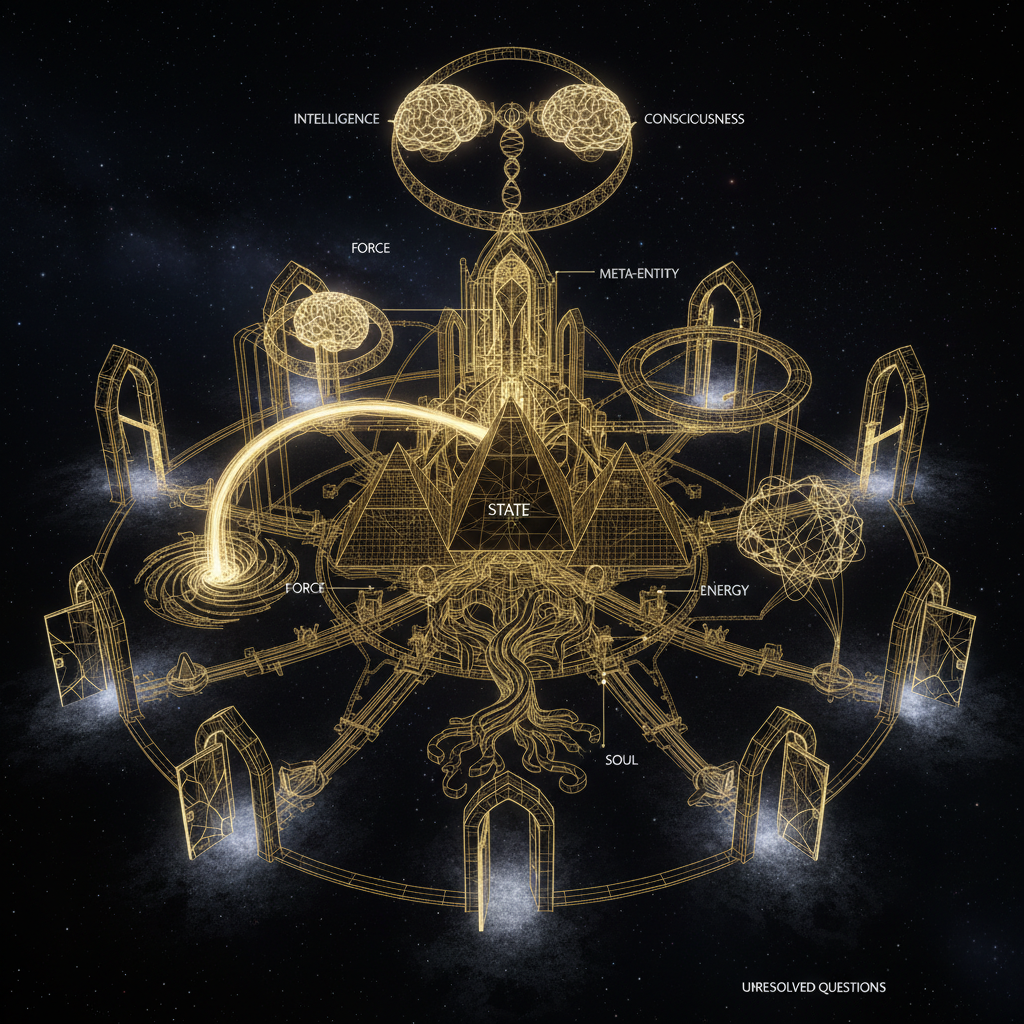
The complete framework assembled: reality, entities, meta-entities, intelligence, consciousness, agency, local time, non-local time, and soul - defined in one formal system. Plus nine open questions and the research program ahead.

TwitterGitHubLinkedInBlueskyThreads
© 2026 Epiphysics • All rights reserved
Made with Supernal Intelligence